
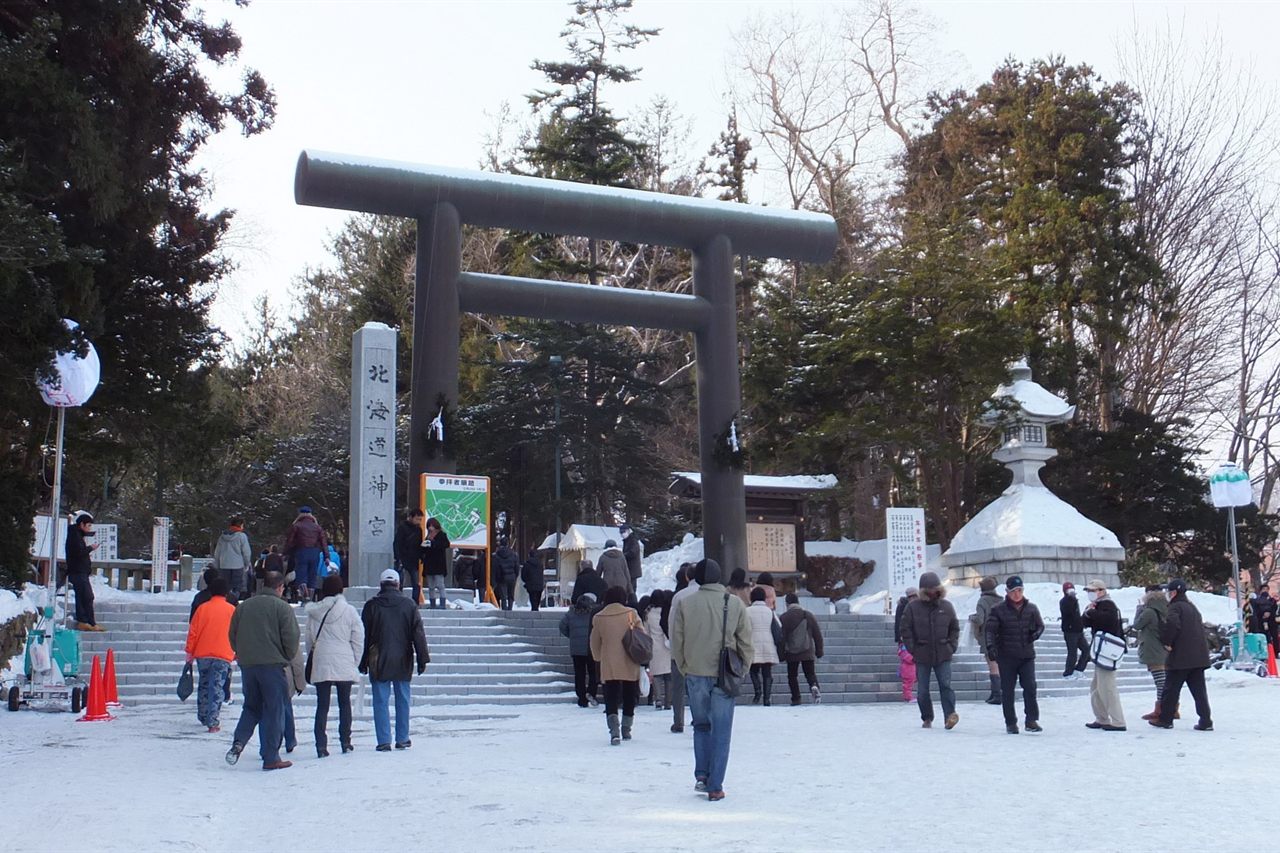
A friend visiting a shrine may ask what this place is, or whether they should join the worship. Before explaining a bow or the purification water, ask how they want to take part. Connecting one visible object with its meaning can be more useful than a long lecture.
Observe the place first; participation is your choice.
Notice the entrance and how other visitors move through it.
Read posted signs and follow any local directions.
Choose whether to take part in the practices described at this shrine.
Keep paths clear and follow photography or access rules.
Practices and access rules vary by shrine; there is no required ritual for every visitor.
A jinja is a religious place used by worshippers. This guide considers how to explain Shinto and kami to someone meeting those ideas for the first time. Begin by asking whether they would like the etiquette explained, with observing as a valid choice.
Explain boundaries and respect before teaching a “correct” action
A torii marks a boundary between everyday surroundings and sacred shrine space. It does not mean every building is open to visitors. Follow local permission and signs for buildings or roped-off areas. Leaving room for people praying is a consideration you can share without specialist knowledge.
Translating kami only as “God” may invite assumptions from another religion. An explanation of respect for varied beings, including nature and ancestors, creates a starting point; different shrines enshrine different kami. Avoid claiming every Japanese person has the same beliefs or reason for visiting.
The purification font is used to cleanse before worship. Follow its current equipment and notices. A general sequence should not be forced when water is unavailable or the arrangement differs. The shrine’s own instructions also take priority for worship gestures.
What does “kami” mean?
“God” is a common translation, but it can suggest a single creator in a way that does not fit Shinto. Kami include figures from mythology, ancestors, natural presences and some historical people. Keeping the Japanese word helps avoid forcing all of these into one familiar category.
Jinja Honcho, an association representing many shrines, describes Shinto through reverence for kami and gratitude for what people receive from nature. That is a religious organisation’s account of its tradition, not a statement that everyone in Japan shares the same beliefs.
Sources: Jinja Honcho introduction and questions and answers.
Is Shinto the same as Buddhism?
No. A jinja is a Shinto shrine; a Buddhist temple belongs to Buddhism. A torii gate is a useful visual clue that you are approaching a shrine.
The distinction does not mean the traditions developed in isolation. Japan’s tourism organisation describes centuries of interaction and combined practice before their formal separation in the Meiji period. Looking at one building or gesture will not tell you everything about a site’s history—or a visitor’s beliefs.
One practical difference: clapping is common in shrine worship; at a Buddhist temple, the usual visitor practice is to join your hands quietly without clapping.
Sources: JNTO cultural context and shrine and temple guide.
A Sapporo example: Hokkaido Jingu
Hokkaido Jingu gives this introduction a local setting. Hokkaido Jinjacho records an enshrinement ceremony in 1869, the move to the present Maruyama site in 1871, and the addition of Emperor Meiji and change to the current name in 1964.
Its listed kami are Okunitama, Onamuchi, Sukunahikona and Emperor Meiji. This is a concrete example of why “nature worship” alone is too narrow an explanation of Shinto.
Hokkaido also has Ainu cultural and spiritual traditions. Hokkaido Jingu does not represent all of the island’s religious history, and Ainu traditions are distinct from Shinto.
Sources: Hokkaido Jinjacho shrine record and JNTO on Hokkaido’s cultural context.
Japanese signs you may need
- 参拝 (sanpai): paying respects. If you are only looking around, wait without blocking worshippers.
- 手水 (temizu): the purification area. Check its instructions before using it.
- 授与所 (juyosho): the counter for receiving amulets and other sacred items; it is not necessarily an entrance.
- 撮影禁止: no photography. 立入禁止: no entry.
Unsure about a photo? Show or say: 「ここで写真を撮ってもいいですか?」 (May I take a photo here?). If a sign is unclear, point it out to a member of staff. An open door is not an invitation to enter a shrine building.
A simple sequence for a first shrine visit
Pause at the entrance, follow the marked approach and use the purification place if it is available. Where ladles are provided, the usual sequence is left hand, right hand, then rinse the mouth using water held in the left hand; do not put your mouth on the ladle. Follow local signs where running water or another arrangement replaces ladles.
At the worship area, the common pattern is two bows, two claps, then one bow, but some shrines have a different practice. Watch the instructions, leave space for other worshippers and keep photography separate from the moment of prayer. You do not need to turn the visit into a performance.
Understand omikuji and goshuin before treating them as shopping
Omikuji are fortunes to read. Looking at the wording together can become a conversation about unfamiliar language. An unfavourable result is not a factual prediction that the trip will fail. Follow any local instructions about taking it home or tying it.
Goshuin are seals and writing received as a record of worship, with a goshuincho as the book used for them. Rather than presenting them as ordinary tourist stamps, leave time for worship before reading the reception instructions. Hours, pre-written sheets and photography policies differ by shrine.
If a friend chooses not to join, explain: “I’ll pay my respects; you can watch quietly here.” Agree on a waiting place that does not block visitors. The goal is a respectful shared visit, not identical actions from everyone.
When you do not know an answer, use the shrine’s materials or ask rather than turning a guess into a cultural fact. Explaining the torii, grounds, worship hall and reception area as you encounter them adds meaning to the visit.
Small details that make the day easier
Gate access and goshuin service are different hours
Hokkaido Jingu’s ordinary-day amulet and goshuin service starts at 09:00 and runs to gate closing. An early walk therefore does not mean those counters are already open. Check the visit date’s notices as well as the gate schedule.
If a friend wants a goshuin, put that request into the plan before booking the next meal. Allow time to find the correct counter and wait without assuming immediate handwriting or a particular format. If the current service is a prepared sheet, follow that notice rather than insisting on what an older social photo shows.
Prepare a short explanation for each object
Use three prompts: “What is this place?”, “What may we do here?”, and “Would you like to participate?” For example, introduce the shrine as a place of worship before explaining a torii or a purification basin. Let a companion choose to observe, then agree on a place to wait without blocking worshippers.
When a question goes beyond what you know, say so and use the shrine’s own information. Keep historical background separate from today’s operating details. A photograph can introduce an object, but it cannot establish permission to enter a building, record a ceremony or copy a practice in every shrine.
Official sources checked 3 October 2026: Hokkaido Jingu service hours
Official information and scope
This guide combines official information and planning proposals. No newly added passage claims a firsthand visit or ride. Check fares, services, opening hours and facility conditions for your travel date.