
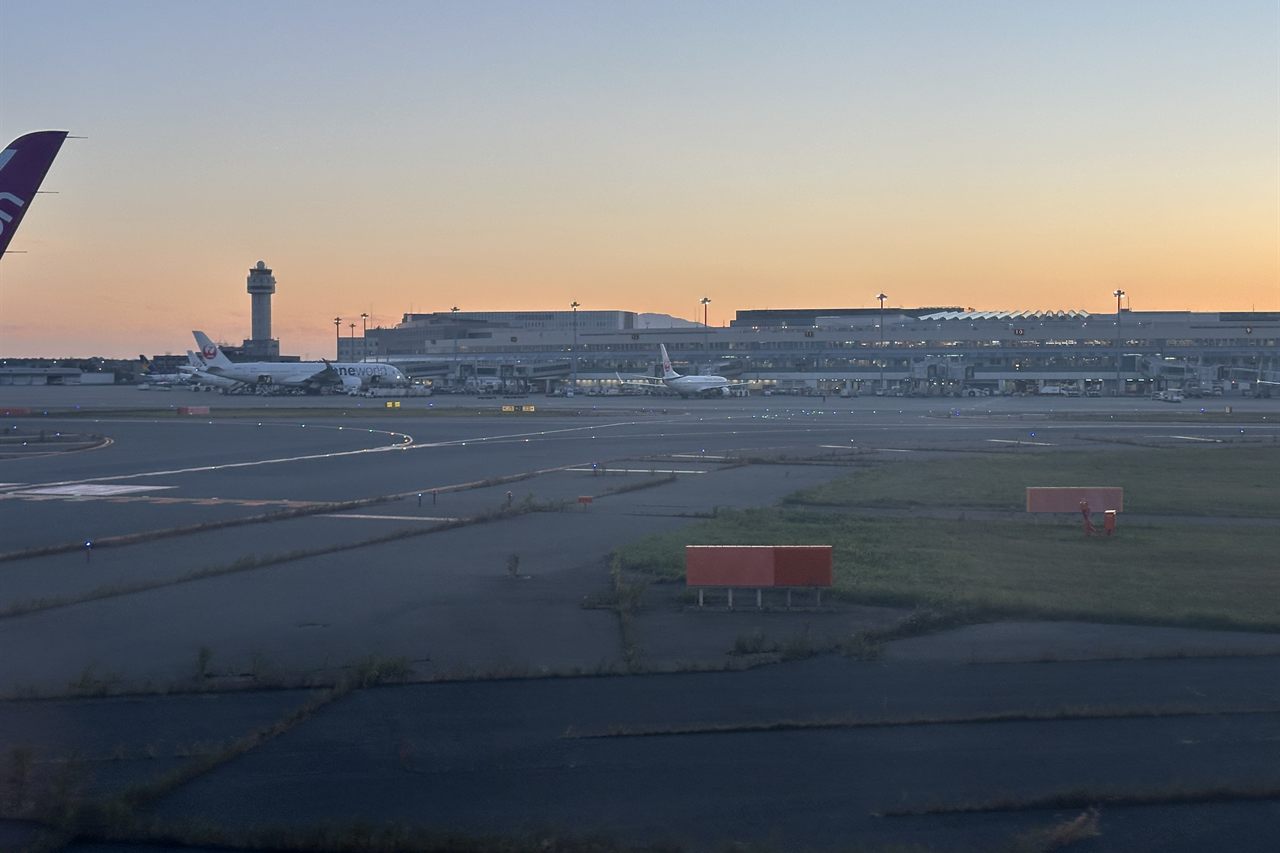
Once you collect your suitcase at New Chitose, the first part of your Sapporo trip begins. A sign saying “Sapporo” does not yet tell you how to reach your hotel. Will you get off at JR Sapporo Station, or use a bus stop closer to the entrance? Working backwards from the hotel door gives that first journey a clearer shape.
Start with the arrival terminal and hotel address, then choose one onward route.
Save the hotel address and check the route from your terminal.
Match the rail arrival station to the hotel’s final transfer or walk.
Check an operating bus and the exact stop near the hotel.
If it fits your needs, confirm pickup guidance and the full journey.
Check the actual hotel entrance and a fallback if services are delayed.
Rail, bus and taxi are alternatives. Check current services, fares and boarding guidance on the day.
This guide compares the train, airport bus and taxi in terms you can use on arrival. Start by saving the hotel’s full name and address. Choose the station or stop from that location, then connect the airport boarding process with the final walk and a fallback for delays.
Before choosing transport: which terminal did you arrive in?
The train, bus and taxi choice starts with your actual arrival lobby. Domestic arrivals are on Domestic 1F; international arrivals are on International 2F. JR New Chitose Airport Station is on B1F by the domestic terminal. From the international side, follow the indoor connecting corridor toward Domestic 2F Center Plaza, then the JR signs down. The airport shows an elevator route as well as escalators, useful when you have a stroller or heavy bags.
- Taking a bus? Confirm your route’s current stop. The domestic bus counter and international transport desk are on their respective 1F floors; neither a nearby JR sign nor a hotel name identifies your bus stop.
- Connecting to another flight? Confirm baggage and check-in rules with the operating airline before treating the city as your next stop. Our terminal-transfer guide covers the indoor route and the questions to ask.
Airport routes and counter floors checked 6 October 2026: official JR access and transport desks. Recheck signs and service status on your travel day.
The time between reaching Sapporo and reaching your room
A published train journey time is easy to put into a schedule. Adding it to your flight’s arrival time, however, does not tell you when you can check in. Arrival formalities, luggage collection, the walk to the station and the wait for a departure all come first. After the train, there may be another exit to find or a subway journey to make.
The useful comparison is where you will handle your luggage. Rail can make the route simple for a hotel near the JR station. A suitable airport bus may reduce transfers for a hotel near its actual stop, even with a longer ride. Put that stop on a map and look at crossings and the entrance; “near the hotel” becomes a real walking route.
A reserved seat is a seat booked for a particular train. JR’s u-seat requires a seat reservation in addition to the ordinary fare. Passing through the gate with a transport IC card and securing that seat are separate tasks.
Train: the default for the JR station
If a suitable bus goes directly to your hotel, it is worth comparing that option before committing to the train. Avoiding the last transfer might matter more than the time on board.
JR fare checked 27 September 2026: the adult one-way basic fare from New Chitose Airport to Sapporo is ¥1,230. Reserved seating, onward subway travel and taxis cost extra. Official fare guide
Buying a ticket at the airport? Ordinary ticket machines take cash. JR lists cash and credit cards for reserved-seat machines and ticket counters; QR payments are not supported. Check the machine type before joining the queue. Official purchase guide
Bus: compare the stop, not only the travel time
With the bus, start at the hotel end of the journey: which stop would you actually use? The airport’s official page lists central Sapporo routes and links to operator timetables. Domestic and international terminals have different platform information, so check both your boarding point and your hotel-side stop for the date you travel. New Chitose Airport official bus information Hokkaido Chuo Bus airport route
A direct bus can be a useful choice if it leaves you near your hotel and saves a train-to-subway transfer. If the stop is still a long walk away, your schedule is tight or road conditions are uncertain, compare the train as well. “Sapporo city centre” covers several stops and route patterns—it is not one destination.
City-centre bus fare checked 27 September 2026: Chuo Bus lists ¥1,500 for adults / ¥750 for children one way to stops including Sapporo Station, Odori Park and Minami 3-jo Susukino. Confirm the stop, operator and payment method for the bus you will use. Official route and fare table
Taxi: pay for the full journey
A taxi gets you to the hotel door, which can make a difference with a group, awkward luggage or a difficult final transfer. It is also worth checking if the scheduled trains and buses do not fit your arrival. Get a current quote for your exact hotel and travel time, and confirm the pick-up point and final price with the operator. Traffic and the time of day matter, so an undated price from a blog is not enough. If the train or a direct bus already works well, there may be little reason to pay extra.
If you want fewer transfers with luggage, you can also compare a pre-booked private transfer between New Chitose Airport and your Sapporo accommodation. This is a separate booking service from the taxi rank or airport bus. Check the pickup and drop-off points, vehicle capacity for your group and bags, waiting time, and cancellation terms before booking.
From arrivals to the train
- Finish arrival procedures before choosing a departure.Use the time you can actually leave with your bags, rather than the flight’s landing time. Immigration and baggage collection can make a reserved train immediately after an international arrival a poor fit.
- Follow signs for JR / 新千歳空港駅.The station is on B1 of the terminal building. Domestic and international arrivals start in different places: do not simply take the nearest stairs down. With a stroller or large cases, follow elevator signs as well.
- Arrange the basic fare and, if wanted, a seat reservation.Check that your IC card is accepted and has enough balance. The reserved u-seat carriage is car 4 and needs a separate reservation. Before paying for two people, check departure time, passenger count and whether the seats are together.
- Match the departure display with your train and carriage.A service labelled Otaru or Teine may also stop at Sapporo. Check the stopping pattern rather than rejecting it by its final destination. For unreserved seating, avoid reserved car 4 and use the platform’s boarding-position signs.
- Keep tickets and reservation details available.A paper basic-fare ticket is needed again at the exit gate. For a ticketless seat reservation, keep the booking available separately from the IC card or basic-fare ticket.
The airport’s official route videos start at the domestic terminal’s 2F Center Plaza and show escalator and elevator routes. They do not start at international arrivals. Locate your terminal and floor on the official floor map first, then use the relevant part of the route. Station location and video coverage checked 2026-10-03.
For the bus, show the stop name
Save the Japanese name of the stop near your hotel. At the information counter, show “この停留所に行くバスは、どこから乗れますか?” — “Where do I board a bus to this stop?” Confirm the terminal, operator and route together; a platform number alone is not enough.
Follow the instructions for your bus on payment timing, accepted payment methods and large luggage. Keep any baggage claim tag until your bag is returned. Check the airport-bound stop separately for your return: it may not be the same place where you got off.
For an early departure, use our early-flight checklist for New Chitose Airport to plan the journey back from Sapporo, including the time needed before check-in.
Platform example, checked 2026-10-03:the airport’s city-centre / direct city-centre listing shows domestic stops 14 and 22, and international stop 84; bus stops are on 1F. Other Sapporo routes can share a number. Before joining a queue, match your intended stop and departure with the operator, then use the terminal map on the official airport bus page.
What to do when seats sell out, you lose your way or your flight is late
- No u-seat available:Compare a reserved seat on a later departure with unreserved travel now. An unreserved ticket does not guarantee a seat. If sitting is essential, find a departure with availability and recalculate hotel arrival. If you already hold a reservation, check its change conditions before boarding another train.
- Wrong station exit or uncertain route:Stop somewhere safe and match the station name and exit number with the hotel address. Show staff the hotel’s official name and access map. Ask: “この入口へ、階段を使わずに行くにはどちらですか?” — “Which way reaches this entrance without stairs?”
- Late flight:Search again from the current time and read service updates. Ask the seller about changes or refunds for any ticket already bought. If you may miss the hotel’s final check-in, contact it with the booking name and estimated arrival and ask what it can arrange.
- Neither train nor bus is usable:Ask the information desk what transport is currently available. For a taxi, confirm the address, passengers, luggage, vehicle availability and estimate including extras, then update the hotel using that realistic option.
Do not rely on “there is a train after 23:00” alone. JR lists a 23:21 special rapid departure from New Chitose Airport and states that it leaves on time regardless of flight delays (checked 2026-10-03). Open the timetable for your travel date and allow for arrival procedures and the walk to the station. JR’s timetable and late-service information
Japanese words to recognise
| On the sign | Meaning / what to check |
|---|---|
| 国内線・国際線 | Domestic / international flights: check which terminal you are in. |
| のりば・乗り場 | Boarding point / platform. Check the destination as well as the number. |
| 自由席・指定席 | Non-reserved / reserved seats. A basic fare alone does not include a reserved seat. |
| 改札 | Ticket gates: the paid-area boundary, not a street exit. |
| 運休・遅延 | Cancelled / delayed service. Check the current operator notice. |
What does reserved seating cost for two adults?
For a one-way journey to JR Sapporo Station, the ordinary adult fare is ¥1,230. A u-seat reservation adds ¥1,000, or ¥800 for the eligible ticketless product. These calculations use the JR Hokkaido airport guide, checked on 2026-10-03.
| Choice | One adult, one way | Two adults, one way |
|---|---|---|
| Non-reserved | ¥1,230 | ¥2,460 |
| u-seat, standard reservation | ¥1,230 + ¥1,000 = ¥2,230 | ¥4,460 |
| u-seat, eligible ticketless reservation | ¥1,230 + ¥800 = ¥2,030 | ¥4,060 |
Add the journey beyond Sapporo Station if your hotel is in Odori or Susukino. Non-reserved travel does not secure a seat; compare the reservation surcharge and available seats if sitting matters after your flight. A ticketless seat reservation does not open the ticket gate: you still need an IC card or basic-fare ticket.
Compare a taxi quote with the whole party’s rail total, rather than one person’s fare. Tell the operator the passenger count and suitcase count. Ask whether highway tolls and late-night charges are included and whether everyone and the bags fit in one vehicle.
A first-evening example: two people, suitcases and dinner
Imagine two travellers with large suitcases heading to a Susukino hotel before dinner. For rail, draw the route from the airport to JR Sapporo Station and onward by subway or on foot. For a bus, draw the route from a stop served by an available departure to the hotel entrance. This is a planning model, not a measured travel time: use the day’s timetable to compare transfers and luggage handling.
Getting the bags to the hotel may matter more than adding another stop. If you eat or shop at the airport, include that time. Read the hotel’s final check-in conditions and contact it if your arrival could be late. Keep any dinner reservation’s late-arrival conditions separately, so you know which commitment needs a message.
If you miss the planned departure, search again from the current time. Check services, ask what happens to any ticket already bought, and update the hotel on your likely arrival. Before choosing a taxi, show the address, passenger count and bags; ask about capacity and the fare estimate. Alternative transport can also be full or disrupted.
The return bus stop may differ from the place where you arrived. Save the airport-bound boarding point and your airline’s required airport-arrival time after reaching the hotel, rather than leaving both questions to your last morning.
Small details that make the day easier
A luggage rack is not included seat storage
JR’s Airport train equipment guide lists shared large-luggage spaces, usable when free. Buying a u-seat does not reserve one of those spaces for your case. The guide covers different train types, so use the signs and staff guidance on the actual train.
Before boarding, take out the things you need in transit. Keep the suitcase stable, out of the door and aisle, and within a position you can monitor. Put your small day bag somewhere you can access without rearranging everybody’s luggage at the next stop. Do not assume a social photograph of a spacious carriage describes the train arriving now.
Airport errands need their own departure margin
Write a short arrival sequence: finish formalities, collect baggage, toilet or meal if needed, prepare the travel ticket, board. If you add shopping, recalculate from the time you will actually be ready to leave rather than the scheduled landing time.
On the return, save the terminal, airline check-in requirement and transport stop separately. A hotel name on a bus route is not the same as your departure platform or airline counter. Finish the return plan after checking in at the hotel, while your flight details and the local access map are together.
Official sources checked 3 October 2026: JR train equipment guide
Official information and scope
This guide combines official information and planning proposals. No newly added passage claims a firsthand visit or ride. Check fares, services, opening hours and facility conditions for your travel date.