
Advertisement This guide contains affiliate links. We may earn a commission if a booking is completed through them.
Hotel searches in Sapporo repeatedly bring up three names: Sapporo Station, Odori and Susukino. All are central candidates, but they create different routes for an early departure, dinner out and arrival with luggage. Instead of choosing the centre of a map, look at where your day begins and ends.
The district name is a starting point; check the actual entrance and repeat journeys.
Compare airport/JR access with trips you will make each day.
Check the actual walk to your chosen subway line and activities.
Consider evening plans and the return route to the property.
Check the entrance, luggage route and any accessibility need before booking.
An area name alone does not guarantee quiet, price, weather protection or step-free access.
Draw three routes: airport to hotel, hotel to a day trip, and dinner back to the hotel. This guide uses those journeys to narrow the area before comparing the room and booking conditions you will actually buy.
Your hotel location shapes more than the first journey
For a morning train, a simple walk to the station can reduce the number of things to manage before departure. For food and walking days, a route that lets you return, leave shopping bags and go out again may be more useful. The hotel is also a place to reset the day.
Do not infer quietness or easy access from the area name alone. The side of the station, the street and the building entrance change the route within the same neighbourhood. If nighttime noise matters, ask the hotel about room location and conditions rather than treating a general area impression as a room guarantee.
A short staircase can be a different task with a suitcase. Use the hotel’s official access map or photographs to identify the actual entrance and exit. A headline walking time is not necessarily your lift route or a time including crossings.
Start with these three options
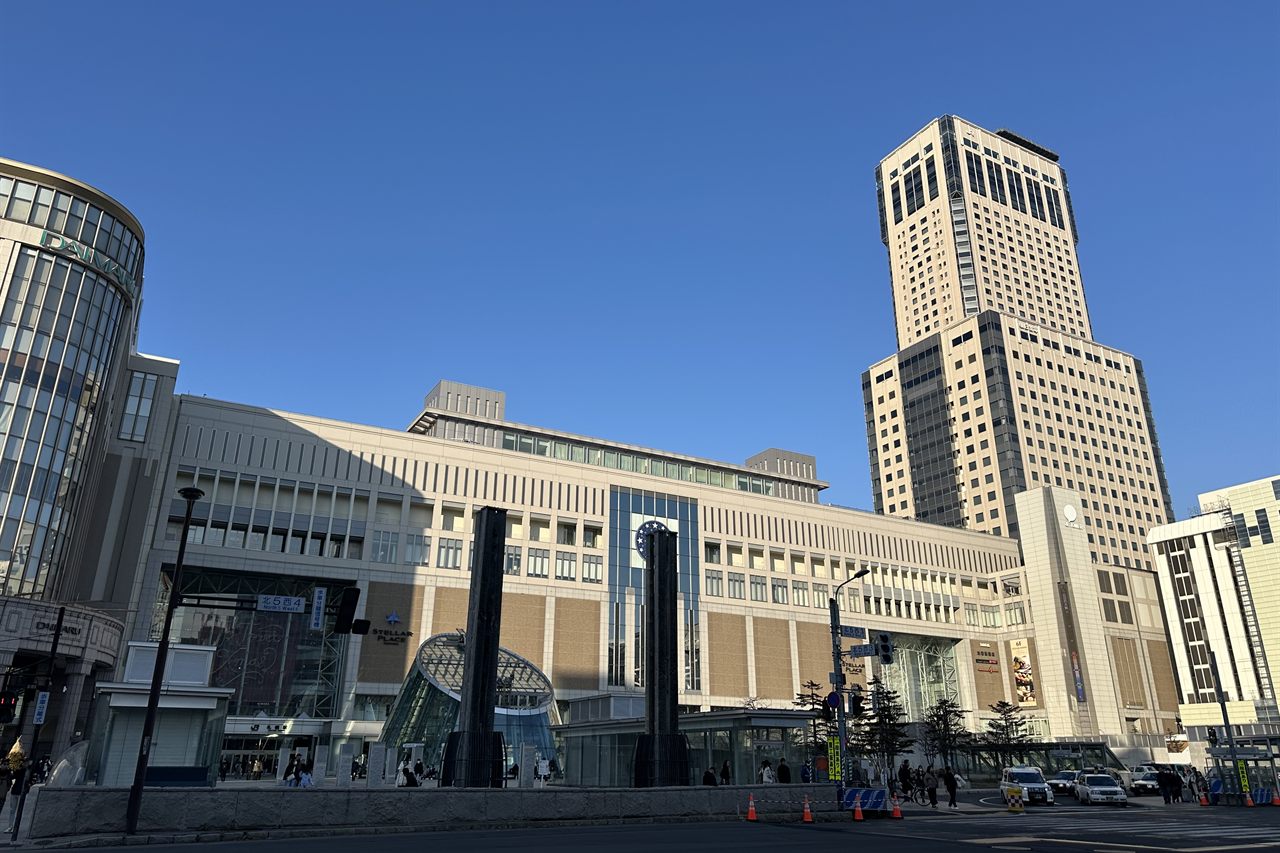
- JR Sapporo Station (札幌駅): best starting point for airport trains and rail day trips. Check whether your hotel is actually close to the JR station entrance you will use.
- Odori (大通): useful if you will split time between the station, Odori Park and restaurants farther south. Check which side of the long park and which subway exit your hotel uses.
- Susukino (すすきの): practical for dinners, bars and late evenings. Choose this for nightlife convenience, then assess noise and your morning departure route hotel by hotel.Important distinction: The area label on a booking site is broad. Compare the hotel’s actual pin, the nearest useful exit, and the walk with luggage.
Why these areas feel different
Arriving by train? JR Hokkaido’s Airport Train takes you from New Chitose Airport to Sapporo. The advertised 33 minutes applies to some Special Rapid services, so check your departure rather than expecting every train to be that fast. Non-reserved seats generally need no advance booking, and compatible IC cards work for the basic ride. That makes the station area a straightforward place to start. JR Hokkaido official Airport Train guide
Odori sits between the JR station and Susukino. The main underground walkway, Chi-Ka-Ho (チ・カ・ホ), connects Subway Sapporo Station and Odori Station. Sapporo’s official visitor site lists roughly 520 metres and about 10 minutes on foot. It is a useful connection, but check the last stretch: not every hotel has an underground entrance. Sapporo official underground walkway guide
Planning dinners and evenings out? Susukino is the main dining and nightlife district. Official visitor information puts Susukino Station roughly 1.5 km, or about 20 minutes on foot, from JR Sapporo Station, with an underground route useful in poor weather. Those are district-to-district estimates; getting from a hotel door to a platform can take longer. Sapporo official walking-distance guide Hokkaido official Susukino guide
Which area fits your plans?
Start with Sapporo Station if you have big bags, an early train or several rail trips planned. But if most evenings will end in Susukino, think about whether you want that trip back north each night. This is a choice based on transport geography, not a promise that hotels around the station are quieter or cheaper.
If a night view is part of your plan, check the route and return options in our Mt. Moiwa without a car guide before choosing your hotel location.
Look at Odori if you want to walk in both directions and keep a first visit flexible. If being right by the airport train or in the middle of nightlife matters more, one of the other areas may suit you better. Check which end of Odori your hotel is near, too.
Try Susukino if dinner and nightlife shape your plans. If quiet sleep or a very early train is your priority, look closely at the exact block and recent hotel reviews. The neighbourhood name alone will not tell you what a room sounds like at night.
Underground routes are not open all night
One detail worth checking before a late night: Chi-Ka-Ho is not open around the clock. Sapporo’s official guide lists 05:45 to 00:30 the following day (checked 2026-09-28). Building and hotel entrances along the way may keep different hours, so save a street-level route for a late return or an early start. Sapporo’s official guide
A few details that are easy to miss
Follow the route right to the door. An underground walkway helps, but the last stretch may still mean a road crossing, stairs or a walk outside. Travelling with a stroller, heavy suitcase or mobility needs? Check the elevator or escalator route as well.
Look beyond the room price. A cheap room feels less cheap if you take a taxi back every night. Compare the total for your dates, room size, taxes and cancellation terms, then add the time or fare needed to get back at night. None of these areas is always the cheapest; events and seasons change prices.
Check which station entrance you need. JR Sapporo and the subway stations connect, but their platforms are not in the same place. Trace the walk from your train to the hotel, rather than relying on the map pin alone.
Six location examples to test the decision — not hotel rankings
Here are six examples from hotel access pages to make the differences easier to picture. These are not hotel reviews, rankings or accounts of a stay. Room prices, availability, noise, winter approaches and step-free routes all the way to a room have not been checked. Open each hotel’s own access page before booking.
- Sapporo Station / JR Tower Hotel Nikko Sapporo: the hotel says it connects directly to JR Sapporo Station and is about a three-minute walk from the East Ticket Gate. Official access. Check the exact route rather than assuming every gate is equally close or the entire walk stays indoors.
- Sapporo Station north / Keio Prelia Hotel Sapporo: the hotel describes a three-minute walk from the North Exit. Its own underground-route guide still ends at street level and crosses a road; a separate wheelchair-accessible route is documented. Official access.
- Odori / Hotel Resol Trinity Sapporo: the hotel lists a one-minute walk from Odori Station Exit 2. That is an exit-to-hotel claim, not a platform-to-room time. Official access.
- Odori west / Sapporo View Hotel Odori Park: the hotel lists five minutes on foot from Odori Exit 1; walking from JR Sapporo Station via the underground area is a longer, multi-part route. Official access.
- Susukino / Mercure Sapporo: the hotel lists three minutes from Namboku Line Susukino Exit 3 or one minute from Toho Line Hosui-Susukino Exit 3. Its access guide points people who need an elevator toward a different, longer route via Susukino Exit 4. Official access.
- Susukino / SAPPORO STREAM HOTEL: the hotel states it is directly connected to Namboku Line Susukino Station. Confirm the actual station-to-lobby route and access hours for the traveller’s needs. Official access.
Trace the route to the actual entrance
- Save the Japanese hotel name and address. Use the exact property on your booking confirmation. Similar brand names can refer to different buildings.
- Open the hotel’s access page. Record the line, station and exit together. Susukino (すすきの) and Hosui-Susukino (豊水すすきの) are different stations.
- Check the last street section. Look for the road crossing, which side of the building has the entrance and whether reception is on another floor. Ask the property if its map does not make this clear.
- Check the luggage-friendly route separately. The closest exit may have stairs. “Directly connected” does not by itself confirm a step-free journey from platform to room.
An early arrival does not necessarily mean early room access
Check-in time and luggage storage are separate questions. A hotel may accept bags before check-in without allowing you into the room, charge for early access, or have conditions on storage. Ask about the hours, fee, size limits and collection deadline. Storage after check-out may follow different rules.
Useful phrase: “チェックイン前に、スーツケースを預けられますか?” — “Can I leave my suitcase before check-in?” For a late arrival: “到着が遅れそうです。何時までチェックインできますか?” — “I may arrive late. What is the latest check-in time?” Give your stay date and booking name through the hotel’s official contact channel.
Booking labels worth recognising
素泊まり means room only, without meals. 朝食付き includes breakfast. 禁煙 means non-smoking and 喫煙 indicates a smoking room. 現地払い means payment at the property, but the booking may still require a card or other conditions; read the plan details.
For “free cancellation,” check the exact deadline, time zone and charge after the deadline. Compare the same guest count, nights and meal plan, including taxes and extra fees. Save the confirmation and property address somewhere you can open without searching your inbox on arrival.
After choosing an area, Compare Sapporo stays on Booking.com
 and set your own dates and guests. Compare the room, breakfast, total price and cancellation terms before booking.
Ask for the route that suits you
Show the hotel “階段を使わずに行ける駅の出口を教えてください” — “Please tell me which station exit I can use without stairs.” Include the station and line you plan to use. This gives the hotel a specific route to explain instead of a general question about accessibility.
Japanese words to recognise
| On the sign | Meaning / what to check |
|---|---|
| アクセス | Directions / getting here, on the property website. |
| 出口 | Exit to the street or a building. Keep the station name with its number. |
| フロント | Reception / front desk, for check-in and questions. |
| 荷物預かり | Luggage storage. Ask the property about its conditions. |
| エレベーター | Elevator / lift. Check which floors it connects. |
A cheaper room can cost more across the trip
Suppose one hotel saves ¥2,000 over two nights, but its location adds ¥2,400 in taxi journeys. The trip costs ¥400 more. These are hypothetical figures, not Sapporo room rates or taxi quotes. Subtract extra transport from the room saving before calling a location cheaper.
Keep time beside the money. If returning to the hotel adds 20 minutes each day for two days, that is 40 minutes. It matters when you want to rest between outings; it may matter less if you only return to sleep. Use your own routes rather than assigning a blanket value to every minute.
| Compare | What to check |
|---|---|
| Stay total | Same dates, party and nights; final amount including taxes and mandatory fees |
| Actual room | Occupancy, bed count and width, smoking category and suitcase space |
| Travelling with children | Bed-sharing ages and limits; extra bedding and breakfast charges |
| Arrival and departure | Final check-in, early checkout and luggage-storage hours and conditions |
| Cancellation | Exact free-cancellation date, time and time zone; later charges and amendment options |
For a non-refundable rate, compare the saving with what happens if your flight or party’s plans change. A flexible rate’s premium can be worth considering while dates are uncertain. Save whether an amendment requires rebooking and whether you must contact the hotel or booking platform.
Official station maps: how to use them
These are official maps with Japanese labels (PDF). Choose the station, zoom in on your exit number, then look for エレベーター (elevator). Trace platform to gate and gate to street separately. The Japanese key above explains the words you need; you do not have to translate the entire map.
Checked 29 September 2026: the linked Odori map marks exits 3, 4 and 9 as closed. Follow current signs and the latest map. These numbers refer to Odori, not exits at other stations.
Choose a starting area for your kind of trip
These are itinerary examples to narrow a search. Make the final choice using the actual hotel entrance route and room conditions.
| Trip | Start comparing | Check before deciding |
|---|---|---|
| Solo traveller with several JR day trips | Sapporo Station area | Route to the JR gate you will use, north versus south side, early access and luggage storage |
| Family needing a midday rest | Sapporo Station or Odori, close to daytime plans | Beds and child-sharing conditions, stroller route and the round trip back to the room |
| Dinner and evening walks | Susukino hotels near your chosen restaurants | Return route, entrance and room orientation. Ask the hotel about quiet-room options rather than assuming an area’s noise level |
| Winter arrival with large cases | A hotel with a short outdoor route from a usable station or bus stop | Elevators, outdoor sections and access hours. Direct connection alone does not guarantee a step-free journey |
For two nights with dinner on arrival, Otaru by JR on day two and an airport departure on day three, repeated station journeys make the station area a reasonable first comparison. Without JR day trips, a plan focused on daytime walks and dinner can keep Odori and Susukino in the search and compare the routes back each day.
Use three journeys to choose between two hotels
- Arrival:Airport transport to the actual station or stop, then the hotel entrance. Mark outdoor sections and stairs with luggage.
- Busiest day:First destination, any midday return and the route home from dinner. Compare paths you will repeat.
- Departure:Checkout to the airport-bound boarding point. Check early entrance access and whether the return bus stop is elsewhere.
If moving hotels during the stay, include checkout, baggage transport and the next check-in. For a two-night trip, compare the journeys saved with the effort of changing rooms.
If arrival-day plans change
- Room not ready:Check the booked check-in time separately from luggage storage. If storage is unavailable, choose an activity manageable with your bags and check locker availability that day.
- Underground entrance closed:Use the hotel’s official access map to find its street entrance. If snow or luggage makes that route impractical, ask the hotel about a usable route and check taxi availability and cost if needed.
- Missing final check-in:Contact the hotel through its official channel with booking name, stay date and estimated arrival. Contact alone does not guarantee admission: keep its reply and check your booking terms.
Before travelling, save the booking confirmation, official hotel name and address, entrance map, final check-in, cancellation deadline and contact details. Finish the booking with the information you will need on the day.
Small details that make the day easier
The accommodation tax is per person, per night
Since April 2026, Sapporo stays carry both city and Hokkaido accommodation taxes. Their combined bands are ¥300, ¥400 or ¥1,000 per person per night, according to the taxable accommodation charge. A room total and a per-person taxable amount are different numbers.
Ask whether the displayed booking total includes this tax or whether the property collects it separately. For a simple illustration, two taxable adults staying two nights in the lowest band owe ¥1,200 combined. This is a calculation example, not a quote for a particular room. Do not add it again if your final price already includes it.
Turn room photos into questions
Social photos are useful for noticing desk space, suitcase room or an attractive view. Check the exact room category and photo date before treating them as your room. Save the booked category, then ask about anything essential: bed arrangement, opening a large suitcase, or the route to reception with a stroller.
For two hotels with similar totals, make a five-item note: actual entrance, room category, tax collection, breakfast starting time and the first departure you need to catch. A breakfast-included rate may be less useful on a morning when you leave before service starts. Ask about alternatives rather than assuming a takeaway breakfast is provided.
Official sources checked 3 October 2026: Sapporo City
Booking a room with children
Once the area is settled, compare the actual room rather than assuming that free bed sharing includes a child’s breakfast or bedding. Our family hotel booking checklist shows what to verify for each child, luggage storage and late arrival before paying.
Official information and scope
This guide combines official information and planning proposals. No newly added passage claims a firsthand visit or ride. Check fares, services, opening hours and facility conditions for your travel date.
Staying for a winter event? Match the venue before booking
Our 2026 autumn and winter event guide separates the Christmas Market, Odori illumination and longer-running street venues. An event running into March does not mean the Odori displays remain open. Match your stay dates to the particular venue, then compare the evening return to each hotel.
If your route includes changing from JR to the subway, use the JR Sapporo transfer guide to distinguish the Namboku and Toho gates before comparing the final hotel approach. Keep the booking options above for your own dates and guests.