
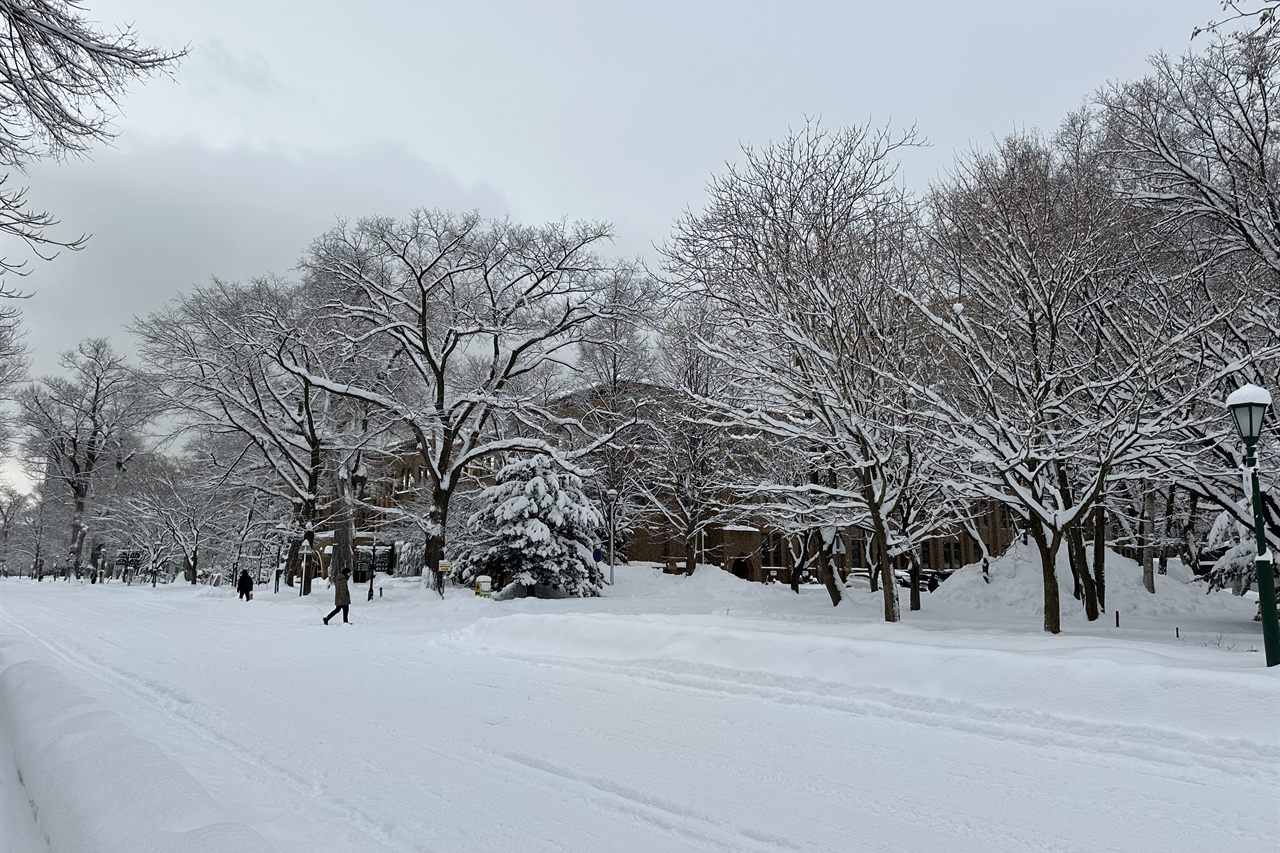
Winter photographs of Hokkaido invite you to imagine a day in a white city. To enjoy it, make the outdoor sections specific: hotel to station, waiting for a bus, or returning after dinner. A temperature number alone does not describe those different moments.
Leave room to change the route when conditions change.
Check the forecast, suitable footwear and the latest service notices.
Allow a delay margin and keep a workable alternative route.
Check the actual path to the entrance; slow down on snow or ice.
Do not assume a route is cleared or step-free. Recheck conditions on the day.
Choose one main purpose for the day and draw the outward and return routes. This guide is about adapting a winter trip, not avoiding one. Decisions about weather, services and roads must follow the day’s official information.
The same temperature can mean different kinds of outdoor time
A day using an underground passage and a day repeatedly stopping outside for photographs do not ask the same things of your clothing. Separate walking, standing and entering heated interiors. Plan layers you can adjust and somewhere to put them. No single temperature determines clothing for every weather condition.
Snow, frozen surfaces and wind reducing visibility are separate conditions too. Try your shoes before travel and consider walking with your actual bags. Footwear described as grippy does not guarantee against falls on ice. Avoid rushing at crossings or steps and follow closures or local restrictions.
Choose photo stops that do not obstruct others. Decide where you can put your phone and gloves so you do not repeatedly stop to unpack bags in the walking route.
Check the final walk, not just the station name
Save the hotel’s Japanese name, address and actual entrance. Ask the hotel which exit works best with luggage and whether the final approach is outdoors. “Near the station” does not tell you whether there are stairs or a road crossing.
Compare a useful elevator exit with the shortest route on the map. Keep a screenshot of the route and your booking; underground reception may be unreliable. A summer street photo cannot establish the condition of a winter pavement.
Check conditions before leaving
- Weather: open the Japan Meteorological Agency information menu. Use “Daily Forecasts” and “Weather Warnings/Advisories” for your destination, not just Sapporo.
- Rail: open JR Hokkaido’s operation page and select the relevant area. “Sapporo area Including Airport Train” is useful for the airport corridor. Read the affected section, direction and update time; a notice may cover only part of a line.
- Bus or flight: check the actual operator and your service. One railway’s status does not describe other transport.
- Return: save the service you intend to take and an earlier alternative. Recheck before travelling farther from your accommodation.
If a suspension is announced, the return is no longer workable or the route is unsuitable for the conditions, switch to your nearby plan. Ask staff while you are still somewhere sheltered. An old screenshot is useful for directions, but not for live service status.
Choose shoes and bags for the walking you will do
Bring footwear suited to wet, uneven winter surfaces, warm layers and gloves. Test the shoes with your actual bag before travelling. No sole or attachment makes every icy surface safe.
Keep luggage manageable enough to move through doors and use a handrail. Stop in a safe place to read your phone rather than checking directions while walking. If the approach looks difficult, ask your accommodation about a suitable alternative before setting out.
Treat a rental car as a separate decision
The Hokkaido Development Bureau’s winter guide explains snow-road preparation and regional weather differences. On the Japanese page, “英語版” opens the English guide; the multilingual leaflets are under “外国人対応チラシ”.
Consider driving only with relevant winter-road experience, a suitable route and flexible timing. If driving on snow or ice would be new to you, choose a public-transport itinerary or an organised option first. A booking does not make a road suitable.
For a driving plan, use the official road-information links to check restrictions along the whole route. “国道” means national road and “道道” means prefectural road. An expressway status alone does not cover local roads. Ask your rental company about the vehicle’s equipment and the route before departure.
Japanese notices and questions to keep on your phone
| Japanese | Meaning |
|---|---|
| 運休 | Service cancelled or suspended; check the affected section. |
| 遅延 | Delayed; check your connection. |
| 通行止め/迂回 | Road closed / detour; follow current instructions. |
| 滑りやすい | Slippery surface. |
Show your destination and ask: “○○へ行く列車は動いていますか?” (Are trains to ○○ running?) or “今日中に札幌へ戻れますか?” (Can I return to Sapporo today?). For luggage, “エレベーターのある出口はどこですか?” asks which exit has an elevator.
Before you close this page
Save your accommodation’s contact details, the intended return service and one indoor option near your base. If travel changes, contact the hotel or activity provider about your booking before assuming a refund or free change.
Sources checked September 30, 2026: the linked JR Hokkaido, JMA and Hokkaido Development Bureau guidance. This is trip-planning guidance, not a forecast or confirmation of services on your winter travel date. Reopen the official information on the day.
A day trip also needs an option not to depart
For a rail day trip from Sapporo, search more than one return possibility as well as the outward train. Write the outdoor walks from hotel to station, station to attraction and back. This does not guarantee journey time; it shows what can be shortened.
On the day, read forecasts and warnings alongside the operator’s service information before deciding to leave. A cancelled service or a restriction is not something to override because you want a photograph. Prepare a later departure, a central indoor day or moving the outing to another date, then compare cancellation conditions.
If the return becomes uncertain, prioritise it over extra shopping or evening views. Contact hotels or bookings affected by delays and follow local staff instructions. A rental reservation does not determine whether you are prepared for winter driving or whether roads are usable.
Keep one desired winter scene together with a viable route back. Being able to reduce the plan is part of successful preparation. Use general equipment advice separately from that day’s warnings, cancellations and restrictions.
Small details that make the day easier
Change pace at the doorway
Local winter-walking guidance highlights small steps and a broad sole contact on slippery surfaces. It also warns that snow or water on shoes can make indoor tiles slippery. Spiked attachments suitable outside can be unsuitable on those tiles.
Before leaving the hotel, put the shoe attachment where you can reach it without unpacking the case. At an entrance, use the designated place to clear snow and follow the footwear guidance; do not block a busy doorway while adjusting everything. Keep one hand available where possible, and stop somewhere safe to read the map.
A slipping forecast has a time and an area
The local slipping forecast concerns central Sapporo sidewalks and crossings in the following morning’s 07:00–10:00 period. Read its scope; it is not a guarantee for a mountain path, a whole Hokkaido trip or the evening return.
Use it to reconsider your first walk and departure margin, alongside current weather and transport notices. Mark the outdoor sections that are unavoidable and the extra photo stop you can remove. If the group is struggling, shorten the outdoor plan while still indoors. Keep “see one winter view and return comfortably” as a complete plan, rather than treating every saved social photo as a destination.
Official sources checked 3 October 2026: Winter walking / Slippery places / Forecast scope
Official information and scope
This guide combines official information and planning proposals. No newly added passage claims a firsthand visit or ride. Check fares, services, opening hours and facility conditions for your travel date.