
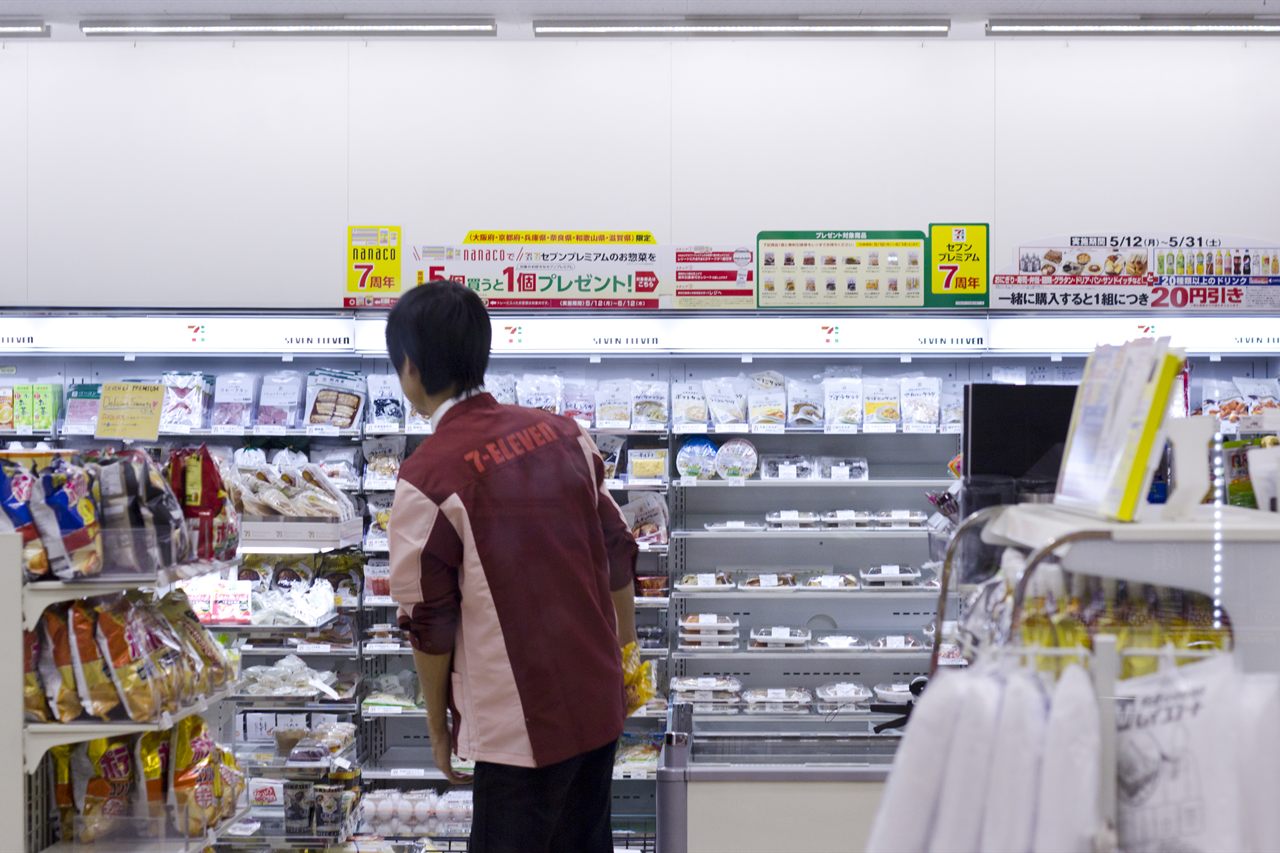
A morning drink, a snack between trains or a simple hotel dinner can make a convenience store part of the trip. The unfamiliar moment is often not choosing food but the cashier’s quick questions. Bags, heating and cutlery are separate questions with separate answers.
Small choices at the register depend on the store and item.
Bring food, drinks and any other purchases to the counter.
Answer the clerk’s question about a bag or warming eligible food.
Check the amount and use a payment method accepted at this store.
If buying counter coffee, follow the cup and machine instructions shown there.
Store layouts and procedures differ; follow the posted instructions and staff guidance.
This guide connects selecting goods, paying, preparing coffee, eating and clearing up. Start with where you will eat; that helps decide heating, carrying bags and utensils.
Choose for the moment when you will use the purchase
The same lunch box may suit heating if you will eat immediately, while a hotel meal needs attention to carrying time and storage instructions. A room does not necessarily have a microwave or plates. Match hotel facilities with the product label.
You do not have to understand every question at once. Answer the bag question first, then heating or cutlery. “A bag, please”, “Please heat this” and “A spoon, please” are separate requests. Check that you have the things needed to eat before leaving.
Fresh coffee may involve purchasing the cup before using a machine. Match size, hot or iced, and the displayed setting. Ask before pressing an unfamiliar button; another chain’s machine may work differently.
Find the queue, then think about where you will eat
Follow the floor arrows or queue sign rather than walking straight to an empty-looking register. It may be closed. Wait for staff to direct you.
Before buying a meal, decide whether you will take it away or use an available eating area. That helps you explain whether you want heating and cutlery. A counter or shop aisle is not automatically an eating space.
Answer bags, heating and cutlery separately
For a bag, say “袋を1枚お願いします” (one bag, please); to decline, “袋はいりません.” Check the displayed charge. If using your own bag, follow staff guidance on where to pack.
“温めますか” asks whether you want food heated. Point to the item you want warmed. Some products cannot be heated in-store. Ask for the chopsticks or spoon you need while paying, not after reaching your hotel.
7-Eleven’s official FAQ explains these services and notes that staff may ask whether hot and cold purchases can share a bag. Other stores may organise the process differently.
Match the coffee cup to the machine setting
Order the hot or iced drink and size you want, then ask how to collect or prepare it. Ordering, cup collection and brewing arrangements vary by chain and product.
At a self-service machine, match the purchased cup to the drink and size before pressing a button. If uncertain, show staff the cup and ask which button to use. A larger button does not upgrade what you bought.
The official 7-Eleven videos linked below show coffee and hot-snack purchasing. They are examples for that chain, not instructions for every machine in Japan.
Tell the cashier before using an eat-in area
If you plan to eat inside, say so before paying and check which seats are available. Opening hours and permitted use can differ from the store itself. Eat-in and takeaway purchases can be handled differently at checkout.
Do not assume every branch has customer toilets. Check signs and ask if needed. Respect temporary closures and do not enter a staff-only area.
Finish payment and check you have everything
Look at the register’s accepted-payment signs. Some counters have staff scan products while you select and complete payment at a customer terminal. If the screen is unclear, ask before tapping repeatedly.
Collect your receipt, change, card and any heated food still being prepared. Use bins according to their labels and store rules. If you cannot find a suitable bin, ask or keep the rubbish in a bag until you can dispose of it properly.
Japanese signs to recognise
| Japanese | Meaning and next step |
|---|---|
| レジ袋 | Shopping bag; confirm whether you need one and its price. |
| 温めますか | Would you like this heated? |
| お箸・スプーン | Chopsticks / spoon. |
| 店内飲食・持ち帰り | Eat in / take away. |
| 現金・クレジット | Cash / credit card. |
| 使用中止 | Currently out of use. |
Phrases to show staff
- 「袋はいりません。」 I do not need a bag.
- 「これを温めてください。」 Please heat this item.
- 「スプーンを1本ください。」 One spoon, please.
- 「このカップはどのボタンですか?」 Which button should I use for this cup?
What to say during one ordinary purchase
Suppose you buy a warm meal, a chilled drink and a coffee. At checkout, say “袋をお願いします” for a bag, “温めてください” to ask for heating, and “お箸をお願いします” for chopsticks. A bag may be charged separately. If you do not need it, say “袋はいりません.” Point to the item when the request is not obvious.
If you buy machine-made coffee, read the cup’s size and hot/iced label before pressing the machine button. Procedures differ by chain and machine; ask “このカップはどのボタンですか?” (Which button is for this cup?) instead of trying a similar-looking button.
A light dinner for two on the way back to the hotel
For this planning example, first choose the meal quantity and drinks, then read refrigeration needs and the use-by date. If you intend to make other stops, consider how the products can be carried within those conditions. Do not assume storage is suitable simply because a hotel probably has a fridge.
At the till, request any heating and cutlery and answer questions about packing hot and cold items together. A reusable bag may remove the need for another one. After payment, check the goods, receipt and utensils, and collect any coffee still at the machine.
For eating in the shop, check that the seats are available and tell the cashier before paying. Hours and conditions vary. Sort waste by the local signs rather than assuming any store bin accepts everything. At the hotel, follow the room or shared-space instructions.
Remember the purchase as choosing, answering, collecting, eating and clearing up. Once that sequence is familiar, there is more room to enjoy the products. Use each shop’s signs to establish which facilities and services it offers.
Small details that make the day easier
In Hokkaido, search for HOTCHEF as a service
Seicomart’s HOTCHEF is prepared in the store kitchen. Its official shop search has separate HOTCHEF and 24-hour filters. They answer different questions: a nearby Seicomart need not offer HOTCHEF or open all night.
If you want a warm local convenience-store meal after a late arrival, check both filters and the shop’s current details. A product photograph is a useful prompt to look, but stock, manufacturing hours and prices can differ. Choose a second meal option before relying on a specific item being ready.
Make one useful shopping list for the room
Before leaving the hotel, check the microwave, refrigerator and eating rules you actually have. List the meal, drinks and required utensils separately. A warm ready-to-eat meal and chilled groceries need different handling; read each product’s label rather than treating the room as a kitchen.
For an early train, buy what can be safely stored under its stated conditions and will be easy to carry. Leave the hot coffee for a shop you know is open on the route. Keep a small rubbish bag and follow the hotel’s disposal instructions. The easiest breakfast is the one you can actually eat before departure.
Official sources checked 3 October 2026: Seicomart HOTCHEF / Shop search / Product information
Official information and scope
This guide combines official information and planning proposals. No newly added passage claims a firsthand visit or ride. Check fares, services, opening hours and facility conditions for your travel date.